
 By Admin
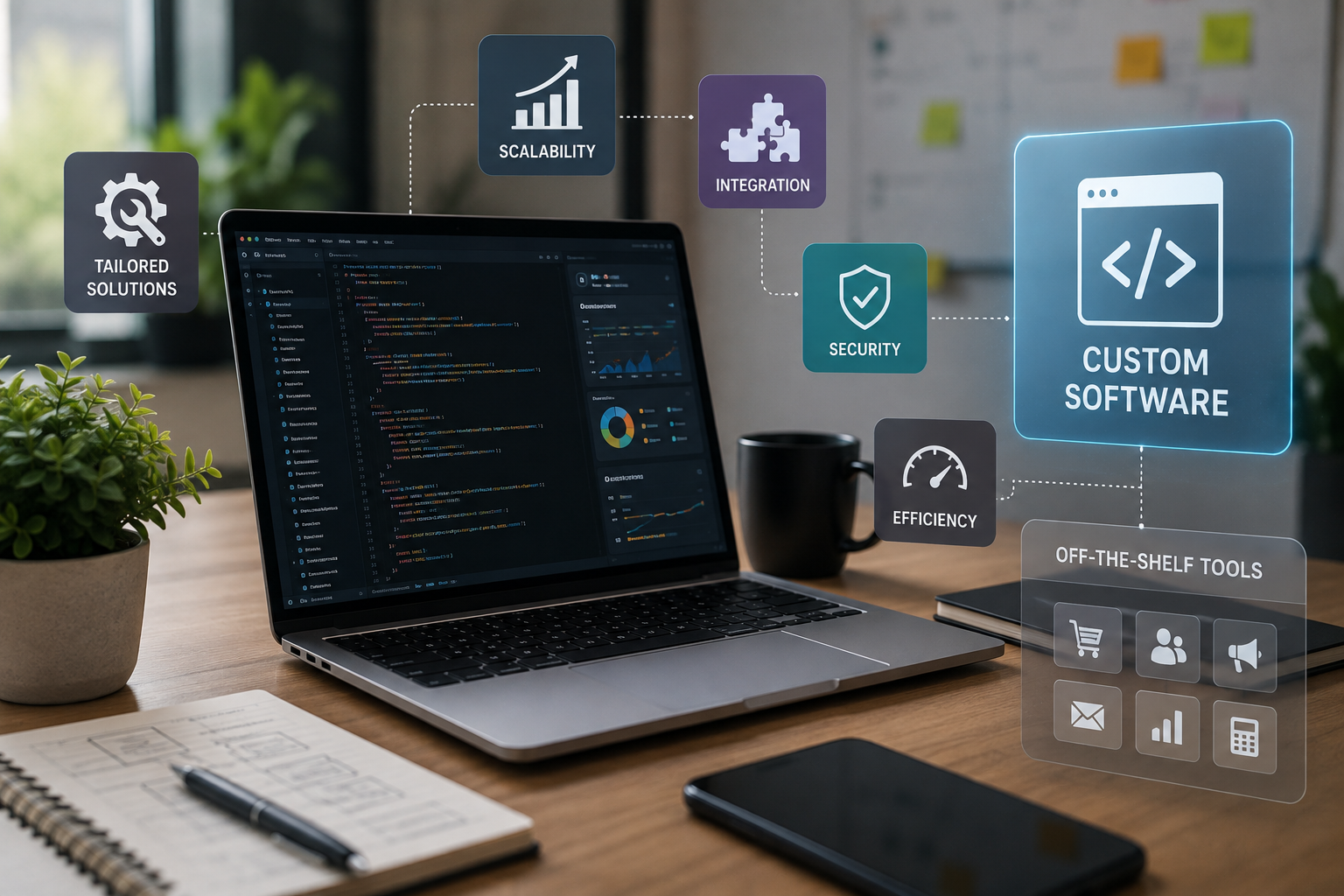
5 Signs Your Business Needs Custom Software, Not Off-the-Shelf Tools
Most businesses start with ready-made tools — spreadsheets, generic CRMs, off-the-shelf platforms. They're quick to set up and cheap to try. But as a business grows, these tools often start working against you instead of for you.
The clearest sign is when your team spends more time working around a tool's limitations than actually using it. If you're duct-taping together spreadsheets, plugins, and manual processes just to get basic reporting, that's a signal your operations have outgrown generic software.

The right software should disappear into the background of your operations — not become another job your team has to manage.
When Custom Software Actually Pays Off
Custom software makes sense once you can clearly define a repeatable process that generic tools can't handle well — whether that's a unique approval workflow, industry-specific compliance requirement, or integration between systems that don't talk to each other out of the box.
It's not about replacing every tool you use. Often, the best solution is a custom layer that connects your existing tools and automates the manual steps between them, rather than rebuilding everything from scratch.
Our Approach
We start by understanding your actual workflow before writing a single line of code. That means sitting with your team, mapping out where time gets lost, and identifying the smallest changes that create the biggest impact — before scaling up to a full custom build.