
 By Admin
Why Moving to the Cloud Is No Longer Optional for Growing Businesses
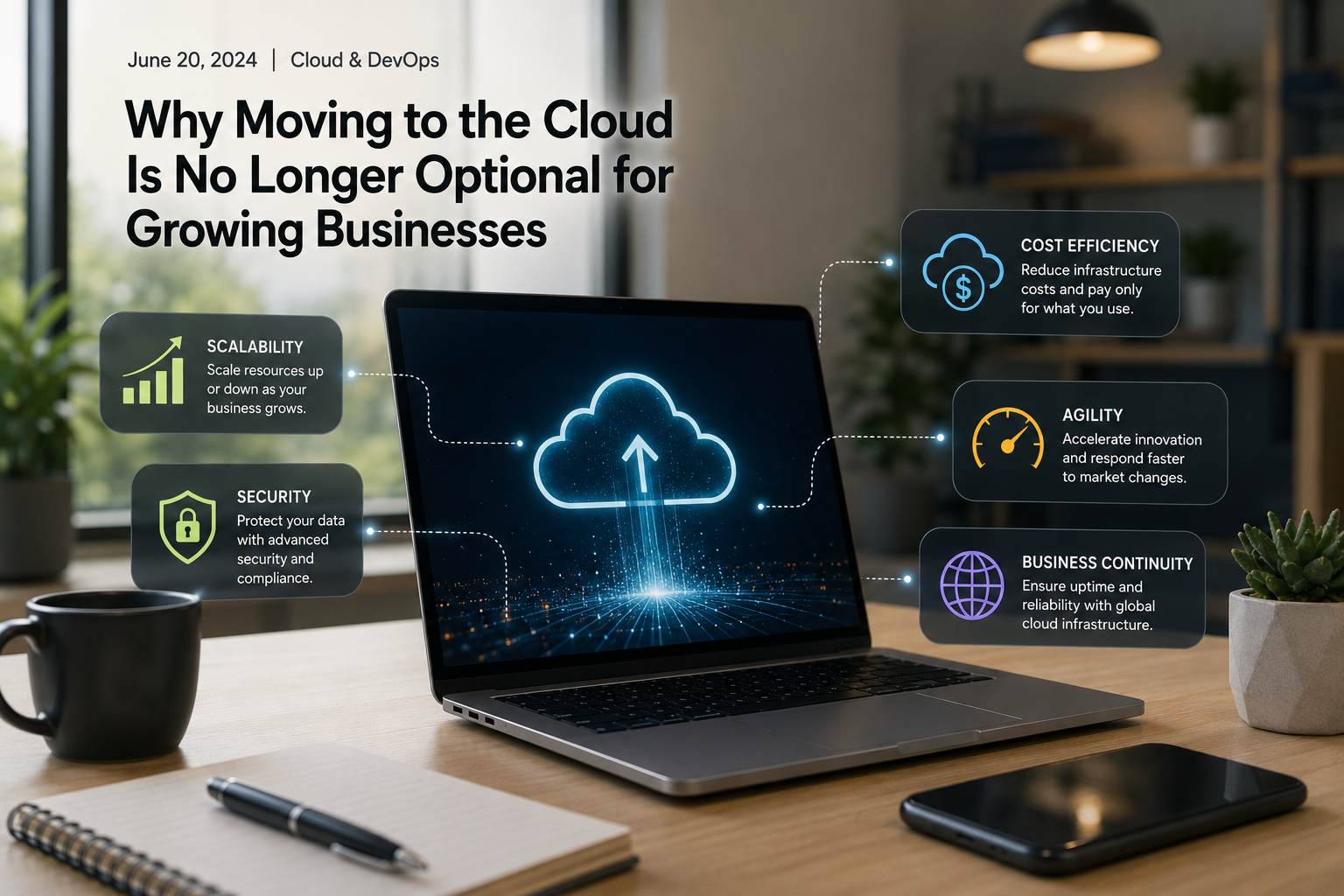
For a long time, moving to the cloud was seen as something only large enterprises needed to worry about. That's no longer true. Growing businesses now depend on the cloud for the same reasons — flexibility, uptime, and the ability to scale without rebuilding infrastructure every time demand increases.
One of the biggest advantages is cost predictability. Instead of investing heavily in physical servers upfront, businesses can scale resources up or down based on actual usage, paying only for what they need.

Cloud infrastructure turns scaling from a six-month engineering project into a same-day configuration change.
Common Migration Concerns
Security and downtime are the two concerns we hear most often. A well-planned migration addresses both — data is migrated in stages, tested thoroughly, and run in parallel with existing systems until we're confident nothing breaks.
Cloud providers also offer built-in security tooling that's often more robust than what most businesses can maintain on their own physical servers.
How We Handle Migrations
We start with an audit of your current systems, identify what can move as-is versus what needs to be re-architected, and build a migration plan with minimal disruption to your day-to-day operations.